
☰
Ear Infections in Children: Symptoms Parents Should Know
Ear infections are among the most common health problems affecting children, especially younger kids. They can cause pain, irritability, disturbed sleep, fever, and temporary difficulty hearing. While many ear infections improve with appropriate care, recognizing the symptoms early can help parents seek medical attention when necessary. Understanding the causes, warning signs, and treatment options can also make it easier to support a child’s recovery.
If your child frequently develops ear infections or experiences persistent ear pain, consulting the best ENT Doctor in Vizag can help identify the underlying cause and provide suitable treatment.
An ear infection occurs when inflammation or infection develops in part of the ear. In children, infections commonly affect the middle ear, the space located behind the eardrum. This condition is often called acute otitis media.
Children are more likely to develop middle-ear infections because their Eustachian tubes are smaller and positioned differently from those of adults. These tubes connect the middle ear to the back of the nose and throat and help drain fluid and maintain pressure inside the ear.
When a child has a cold, allergy, or respiratory infection, swelling can block these tubes. Fluid may then build up behind the eardrum, creating an environment where viruses or bacteria can multiply.
Recognizing an ear infection can sometimes be difficult, particularly in babies and toddlers who cannot clearly explain what they are experiencing.
Common symptoms include:
A child may also appear unusually restless or have difficulty lying down. Ear pressure and pain can sometimes become more noticeable at night.
In babies, changes in feeding behavior may also occur because sucking and swallowing can increase pressure in the middle ear.
Several factors can increase a child’s risk of developing an ear infection. Colds and other respiratory infections are common triggers because they can cause inflammation and congestion around the Eustachian tubes.
Children who attend daycare or school may be exposed to more respiratory infections, increasing the likelihood of developing ear problems. Exposure to cigarette smoke can also increase the risk of ear infections.
Other contributing factors may include allergies, enlarged adenoids, and certain anatomical differences in the ear and throat.
Some children simply have a tendency to develop repeated ear infections. In such cases, it is important to identify whether an underlying issue is contributing to the problem.
You may notice behavioral changes before your child complains about ear pain. Younger children may become more irritable, cry more frequently, or repeatedly touch their ears.
Parents should also pay attention to hearing and communication. A child who suddenly does not respond when called, asks for things to be repeated, or increases the volume of the television may be experiencing temporary hearing difficulties caused by fluid behind the eardrum.
However, these signs do not always mean that an ear infection is present. Ear discomfort can have several causes, so a proper examination is important for an accurate diagnosis.
Mild ear discomfort may sometimes improve with time, but certain symptoms require medical evaluation.
Parents should consider consulting a doctor if the child has severe or persistent ear pain, high fever, fluid or pus coming from the ear, noticeable hearing difficulties, or symptoms that are getting worse rather than improving.
Medical attention is particularly important for very young children, children with repeated infections, or those who appear unusually unwell.
If ear infections happen frequently, an ENT specialist can examine the child’s ears, nose, and throat to determine whether there is an underlying reason for recurrence.
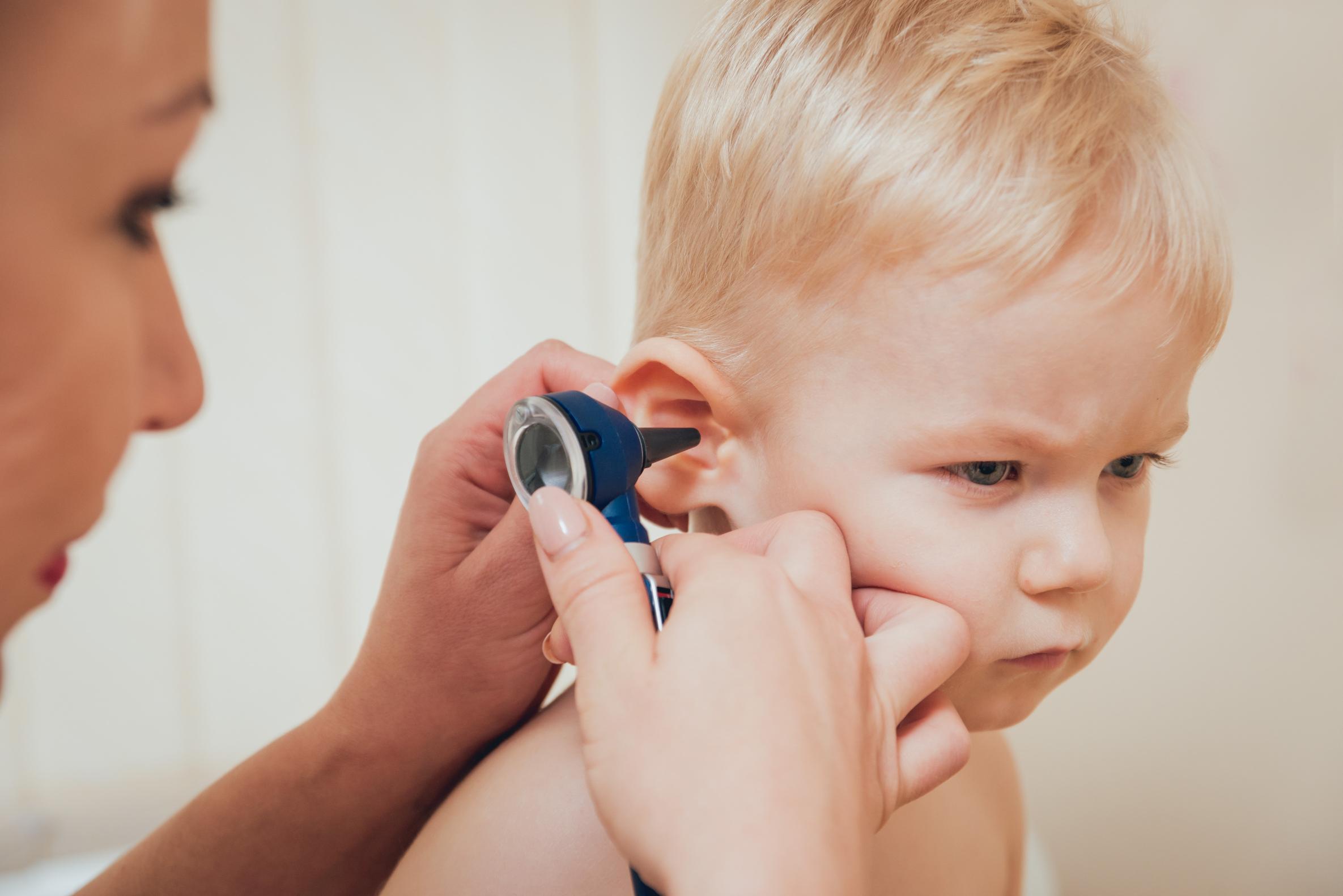
An ENT specialist generally examines the ear using an otoscope. This allows the doctor to assess the ear canal and eardrum for signs of inflammation, fluid, or infection.
Depending on the child’s symptoms, additional hearing tests may be recommended. These tests can help determine whether fluid or repeated infections are affecting hearing.
For children experiencing recurrent problems, the doctor may also evaluate the nose, throat, and adenoids because these areas can influence middle-ear health.
Parents should avoid relying only on symptoms to determine whether antibiotics are necessary. Ear infections can be caused by viruses or bacteria, and treatment depends on the individual situation.
Treatment depends on the child’s age, symptoms, severity of infection, and overall health.
Some ear infections improve without antibiotics, particularly when symptoms are mild and the child can be monitored appropriately. A doctor may recommend observation along with measures to manage pain and fever.
When a bacterial infection is suspected or symptoms are severe or persistent, antibiotics may be prescribed. Parents should give prescribed medication exactly as directed and complete the recommended course unless the treating doctor advises otherwise.
Pain relief may also be recommended to keep the child comfortable. Parents should always use age-appropriate medications and doses recommended by a healthcare professional.
For children with frequent or persistent ear infections, additional evaluation may be necessary. In some cases, an ENT specialist may discuss further treatment options based on the child’s individual needs.
Temporary hearing difficulty can occur when fluid builds up behind the eardrum. Sound may not travel normally through the middle ear, making voices or other sounds seem muffled.
Usually, hearing returns to normal once the fluid clears. However, persistent fluid or repeated infections can potentially interfere with hearing and, in young children, may affect speech and language development.
This is why recurrent ear infections should not be ignored. If you notice changes in your child’s hearing, communication, or school performance, discuss them with an ENT specialist.
For parents looking for specialized medical care, hospitals such as Narayana Medciti provide access to healthcare services where children with ENT-related concerns can be evaluated by appropriate specialists.
Not every ear infection can be prevented, but certain healthy habits may help reduce the risk. Keeping children away from cigarette smoke, encouraging good hand hygiene, and reducing exposure to people with respiratory infections can be helpful.
Keeping vaccinations up to date may also reduce the risk of some illnesses associated with ear infections. For infants, proper feeding practices can also be discussed with a pediatrician.
Most importantly, parents should avoid putting objects, oils, or unprescribed drops into a child’s ear. The ear is sensitive, and inappropriate home remedies may cause irritation or injury.
An occasional ear infection is common during childhood. However, repeated infections, persistent fluid, hearing difficulties, or ongoing ear pain deserve professional evaluation.
A qualified ENT specialist can assess the child’s ears and identify whether problems such as enlarged adenoids, allergies, Eustachian tube dysfunction, or other conditions are contributing to repeated infections.
Choosing the best ENT Doctor in Vizag can help parents receive appropriate evaluation and guidance when their child experiences recurring ear-related problems.
A) Common signs include ear pain, fever, irritability, difficulty sleeping, pulling or rubbing the ear, reduced appetite, hearing difficulties, and fluid discharge from the ear.
A) No. Some ear infections may improve without antibiotics. Treatment depends on the child’s age, symptoms, severity, and whether the infection is likely to be bacterial. A doctor should determine whether antibiotics are appropriate.
A) Ear infections can cause temporary hearing difficulty when fluid builds up behind the eardrum. Persistent fluid or repeated infections may require further evaluation to prevent prolonged hearing problems.
A) Parents should consider an ENT consultation if their child has repeated ear infections, persistent ear pain, hearing difficulties, recurring fluid in the ear, or symptoms that do not improve with appropriate care
Subscribe to Narayana Mediciti's newsletter to receive the latest news and exclusive offers.

24 July 2026, 04:50
Comments: 0

24 August 2026, 11:59
Comments: 0
20 August 2026, 12:43
Comments: 0

24 August 2026, 12:06
Comments: 0
Narayana Medciti,
Healthcity, Arilova, Visakhapatnam, Andhra Pradesh 530040
Tresa Guest
07 April 2026, 11:06
Post: Best Dermatologists in Vizag for Acne and Scar Treatment
https://WWW.Waste-ndc.Pro/community/Profile/tressa79906983 Guest
15 February 2025, 16:21
Post: Best Surgeons along with the Best Hospitals in Vizag
https://WWW.Waste-ndc.Pro/community/Profile/tressa79906983 Guest
15 February 2025, 16:19
Post: Best Surgeons along with the Best Hospitals in Vizag
Lvivforum.pp.ua Guest
16 September 2024, 21:33
Post: Best Surgeons along with the Best Hospitals in Vizag